AI changes the traffic game: When clicks are no longer everything
For years, traffic and clicks have been the central metrics for evaluating digital marketing performance. However, the rapid development of artificial intelligence is changing how users access information online, along with how brands are seen and remembered. As search tools and AI platforms become increasingly capable of synthesizing, summarizing and answering directly, users' information journeys no longer depend entirely on clicking individual links as they once did.
This shift raises an important question for marketers: do familiar metrics such as clicks and website traffic still fully reflect the value of communications activity? In the new environment, marketing impact is increasingly expressed through many different signals, from brand visibility and how often a brand is mentioned in information sources to search and visit behavior later in the user journey. As AI becomes a new intermediary layer in the information ecosystem, understanding how traffic is generated and measured is becoming an important task for marketers.
Search behavior shifts in the AI era
The need to find information quickly and visually is making AI-integrated search tools increasingly popular. Instead of visiting multiple websites to find an answer, users are becoming more accustomed to receiving information directly on the search results page.
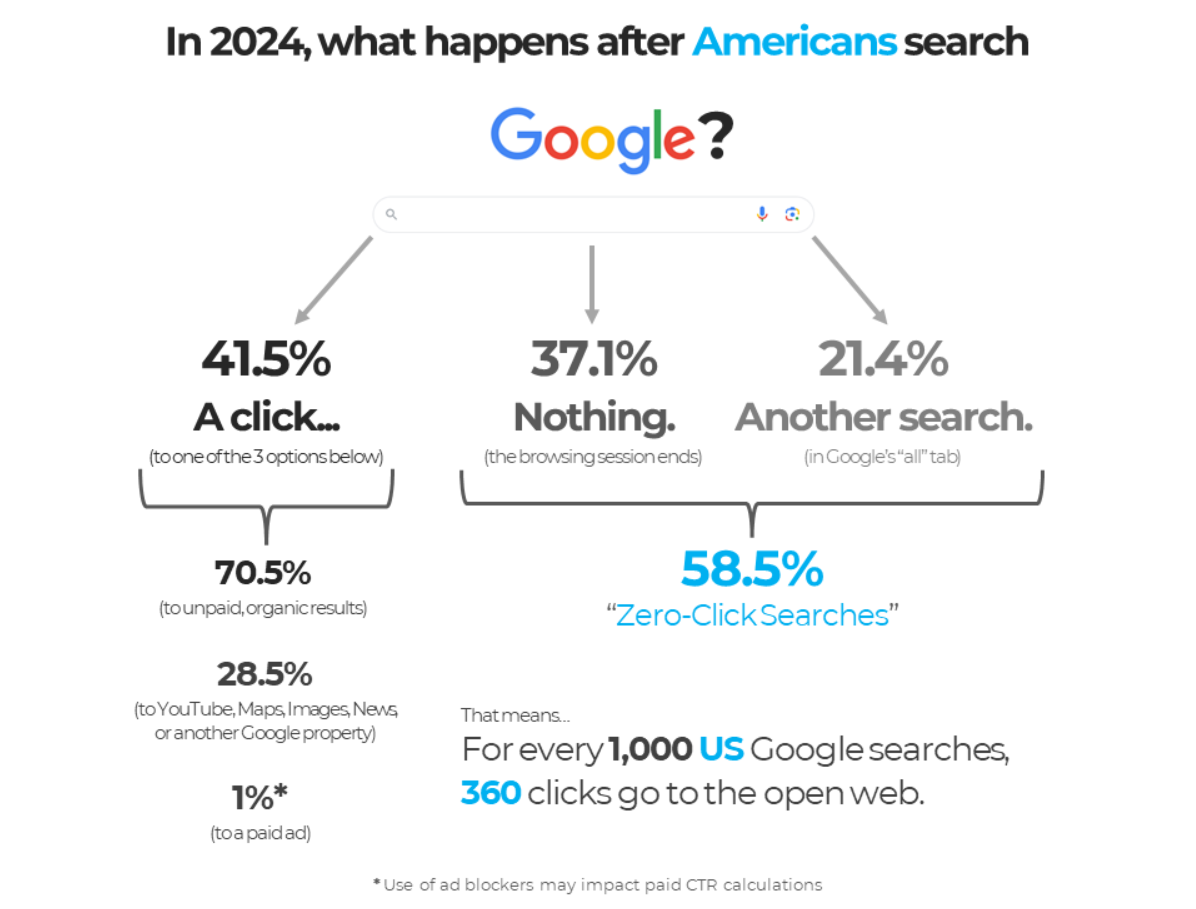
Data from research by SparkToro shows that in the US, nearly 60% 60% of Google searches in 2024 ended without users clicking any result. This means most queries are resolved directly on the results page through snippets, information panels or AI-generated summaries.
Further analysis shows that only 41,5% 41.5% of searches in the US lead to a click, while 58,5% 58.5% are “zero-click” queries. A similar trend is visible in Europe, where nearly 60% 60% of searches do not lead users to another website. These figures reflect a clear change in how people access information: instead of clicking multiple links, they often read only the content summarized directly on the results page.
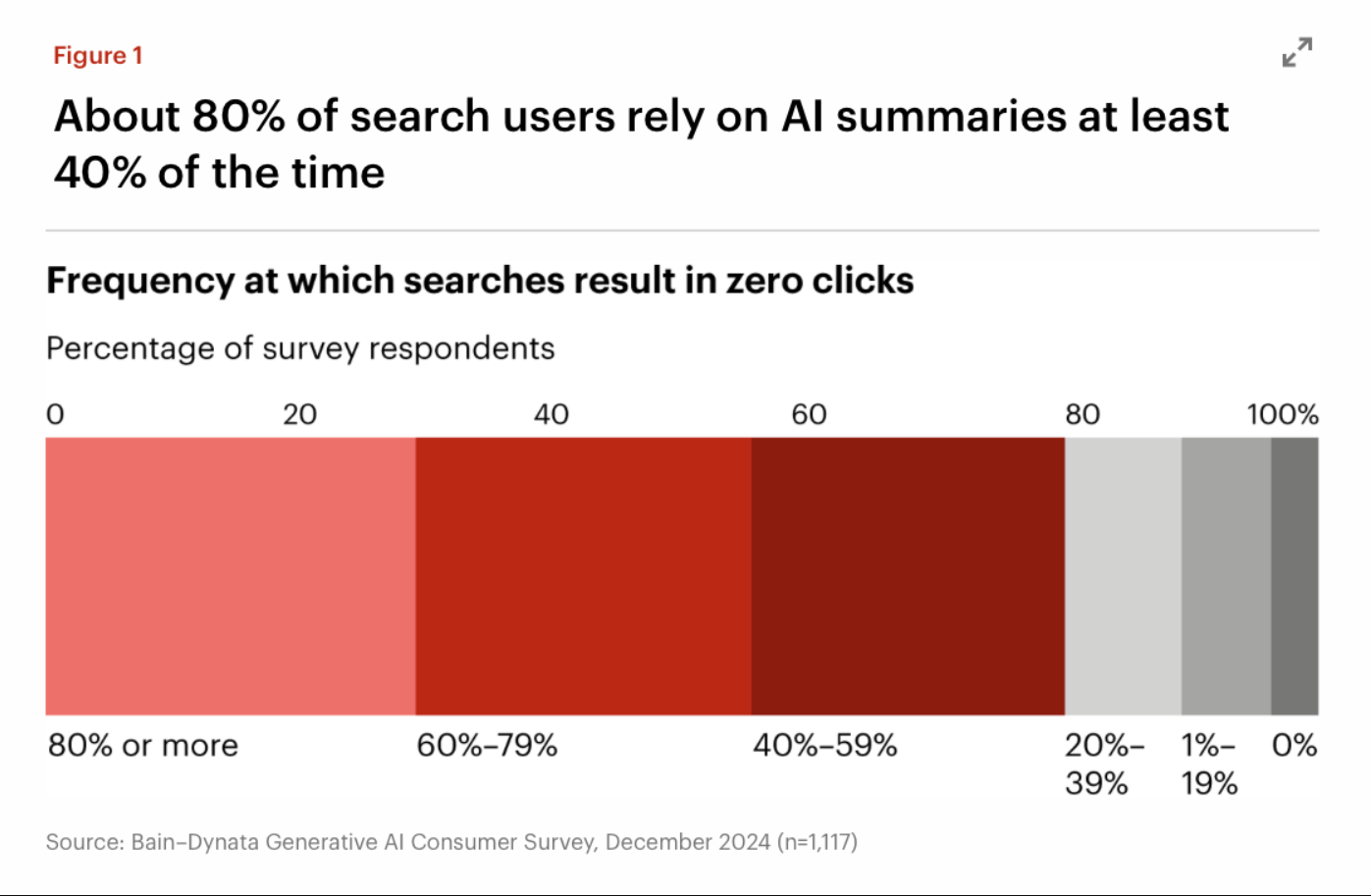
AI-generated summaries are accelerating this trend. According to research by Bain & Company, approximately 80% 80% of users now rely on summarized results or direct answers in at least 40% 40% of their searches, causing organic search traffic to be estimated at 15–25% lower than before. This means traditional metrics such as click-through rate (CTR) and search traffic no longer fully reflect the value of appearing on the results page.
At the same time, new AI search platforms are also growing quickly. Tools such as Google AI Overviews, ChatGPT or Perplexity are increasingly used to synthesize information and support decision-making. According to a McKinsey survey, more than 50% 50% of consumers have used AI-integrated search tools during the shopping process, and by 2028 an estimated 75% of searches will involve AI summaries.
These changes show that the consumer search journey is shifting clearly. Users are willing to accept automatically synthesized answers and visit a website directly only after entering the consideration or purchase stage. In this context, a brand appearing on the results page remains valuable even without generating a click, because it builds awareness and lays the groundwork for future searches or decisions. At the same time, this reality challenges traditional measurement systems that rely mainly on clicks and traffic.
Direct traffic and attribution: “late” signals in measurement
When many initial interactions take place on AI platforms and do not lead to clicks, some of marketing's impact will not appear directly in traffic reports. Instead, metrics such as direct traffic or visits from unidentified sources tend to increase. This happens because users may see brand information in AI summaries or synthesized content, remember the brand name, and later search for it themselves or visit the website directly.
As a result, the impact of appearing on AI platforms often becomes visible only later in the customer journey. Instead of generating an immediate click, it helps build awareness and trust, then converts into later signals such as branded searches, direct visits or contact requests from people who already know the business. This shows that the purchasing journey is increasingly taking place outside the website, so initial clicks no longer reflect the full impact of marketing activity.
As a result, traditional attribution models, mostly based on the last touchpoint or clicks, no longer accurately reflect the role of initial interactions. As Ryan Law, Ahrefs’ Content Marketing Director, observed, “traffic is no longer the only signal of success,” meaning traffic is no longer the only measure of effectiveness. Marketing needs to add other long-term indicators. Instead of focusing only on each click, we must also track indirect signals such as branded searches, social engagement, off-site brand mentions and the brand value that has been built.
Measurement strategy should therefore remain flexible: for example, targeting share of voice and impression share in AI results, as well as indirect conversions from accounts that encountered the brand early. In short, we need to look at the overall “impact” of an interaction rather than simply count direct interactions. In this no-click search environment, marketers will focus on measuring impact rather than interaction alone.
Brand value goes beyond clicks
When users receive information without clicking through to a page, the value of that interaction becomes invisible to ordinary analytics tools, but it does not cease to exist. Brand impressions through AI or no-click results still help build awareness. A Digiday report citing Bain research confirms that 80% 80% of users rely on AI results across many searches, causing brands to lose 15-25% 15–25% of organic traffic. However, AI-driven search also creates new opportunities for brands: a brand’s appearance in AI answers (AI summaries) is strongly correlated with the number of times the brand is mentioned on authoritative websites or linked back to. In other words, media and PR have become essential: the more often a brand appears in the press, industry forums or other websites, the more likely it is to be cited by AI.
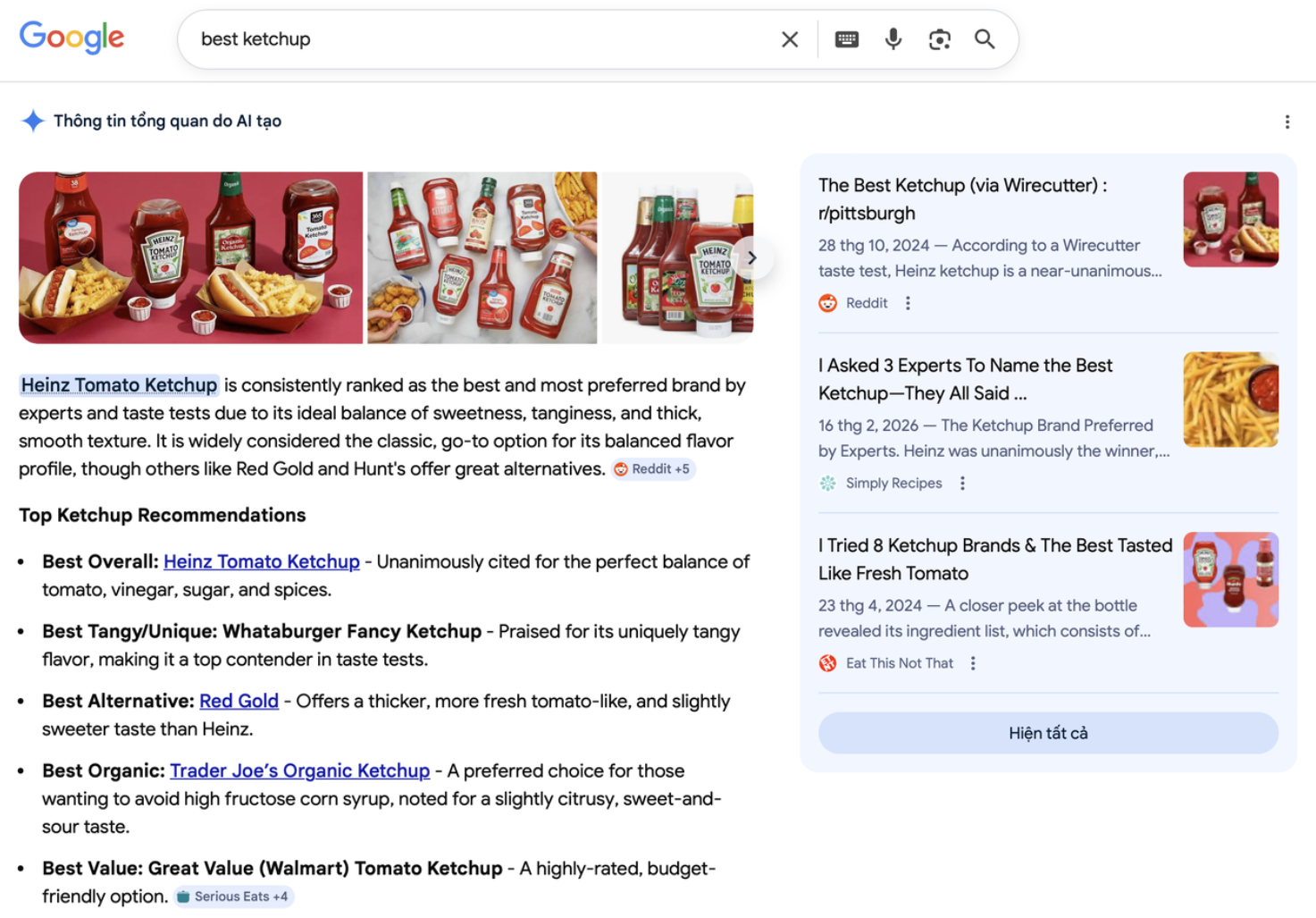
Simply put, increasing visibility across third-party sources such as news articles, expert reports and even objective reviews is a way to “chase” no-click impressions. Media coverage and thought leadership content create impressions and trust even when users do not actually visit the site. Instead of focusing only on their own website, marketers need to ensure that the brand is being discussed across networks of news sites and social platforms.
An internal study, Zero-Click Marketing: 5 Effective Tactics When No One Clicks, by Fireband, found that 85% 85% of citations in AI search results come from third-party sources rather than a brand’s homepage. This reinforces the idea that in the AI era, appearing frequently in the press and communities is the optimal strategy for brands to be recognized by AI models, creating a foundation for later searches and interactions.
The role of content and measurement in the new landscape
Although search clicks are declining, quality content remains central to digital marketing strategy. However, the way content is built needs to change to match how AI systems collect and synthesize information. Content increasingly needs to be clear, well structured and sufficiently informative so AI-integrated search tools can easily extract and use it in summaries or direct answers. Recent research shows that AI systems prioritize well-structured content sources focused on semantic search and long-tail, high-intent queries. At the same time, some traditional formats such as hard-to-crawl PDFs and gated content tend to be used less by AI.

Alongside content structure, keeping information up to date is becoming increasingly important. Modern search systems often prioritize citing new or recently updated content, especially for timely topics or those related to purchase decisions. Maintaining and refreshing existing articles, such as adding new data, correcting outdated information or updating the perspective, can therefore help content remain prioritized for display. Rather than focusing only on producing more new articles, many current content strategies emphasize optimizing and upgrading existing content to preserve accuracy and reference value.
Not all content delivers the same value throughout the marketing journey. As clicks decline, prioritizing topics closely tied to real customer needs or directly related to products and services becomes more important. In-depth content that solves users’ actual problems may attract less traffic but generate higher conversion rates or stronger interest. This reflects a shift from maximizing traffic to optimizing its quality and relevance to business goals.
Alongside changes in content strategy, performance measurement also needs to be placed in a broader context. As users increasingly receive information directly from AI summaries or synthesized answers, relying only on website visits no longer fully reflects content impact. Instead, marketers are beginning to track signals such as whether the brand is mentioned in AI answers, how often content appears in search summaries and how visible the brand is in synthesized results.
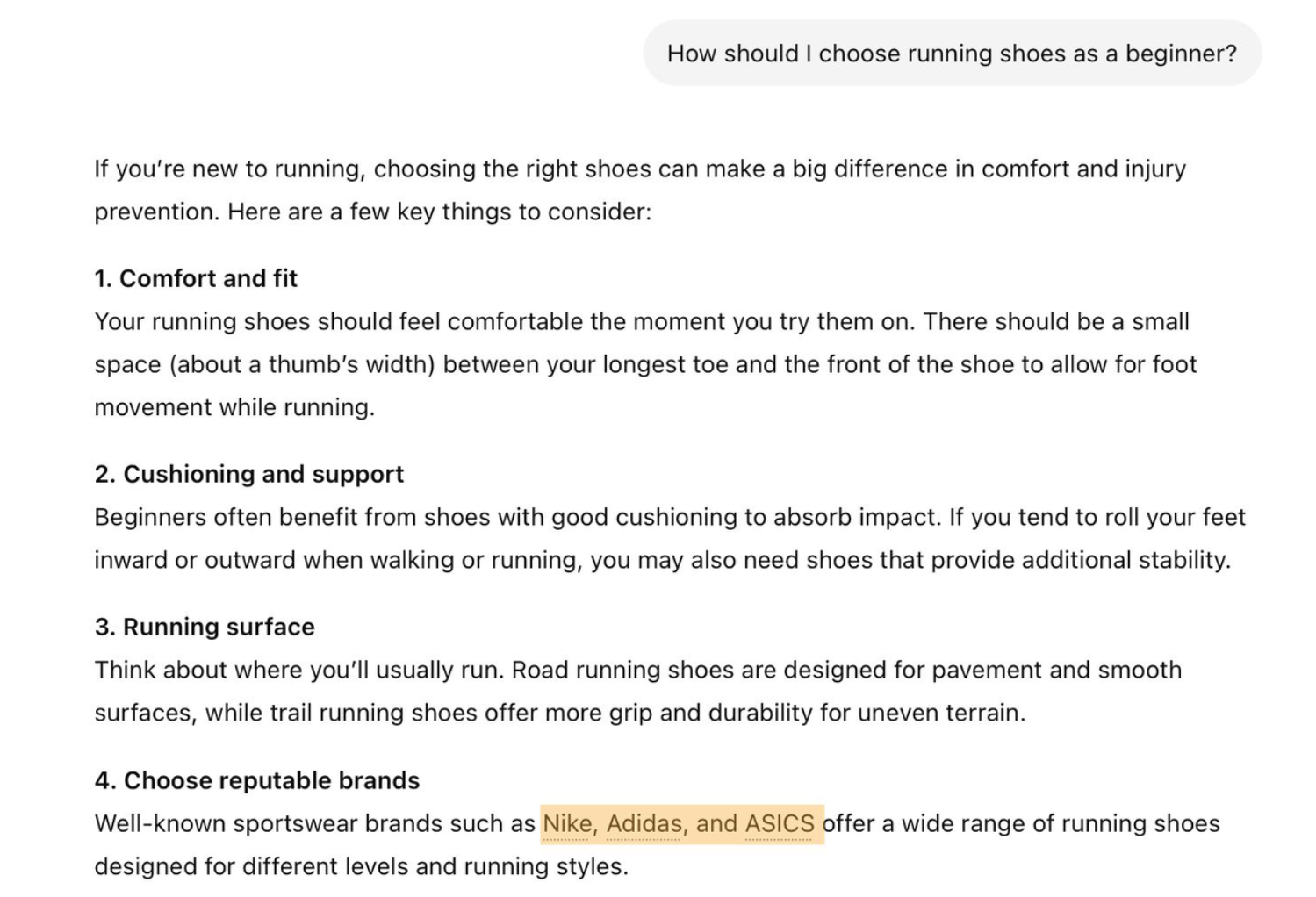
In an increasingly “no-click” search environment, becoming a reference source for AI systems can sometimes deliver more value than simply ranking highly in a traditional list of links. When content is cited in an AI summary, the brand can appear directly in the answer users see first, creating an impression and building trust before they even visit the website.
The marketer’s role and practical lessons
Changes in tools and user behavior require marketers to change their thinking and methods. Here are some important lessons and recommendations:
- Shift measurement goals
Instead of focusing only on clicks and traffic, metrics such as brand-mention rate, branded searches, share of voice and frequency of appearance in AI summaries will more clearly reflect brand influence. Measurement systems should also include CRM/ABM data to track indirect conversions, meaning accounts that encountered the brand through AI before becoming customers.
- Optimize content for AI (GEO)
Invest in clear, structured content (schema markup, FAQ tags and appropriate headings) so AI can understand and cite it easily. Prioritize fresh data and depth over volume. Identify and focus on topics with strong business potential, because although they may generate less traffic, they can produce higher-quality leads.
- Expand distribution channels and PR
Increase visibility across third-party sources: news media, specialist publications, podcasts, conferences, social media and YouTube videos. Active community participation and sharing professional knowledge not only build awareness but also strengthen the evidence AI uses when citing a brand. At the same time, use branded search ads as a micro billboard to reinforce the message even when users do not click.
- Prioritize diverse content formats
Video (YouTube, LinkedIn and TikTok), images, infographics and original content such as research and surveys can provide direct value without requiring a click. For example, a LinkedIn carousel or a 10–15-minute tutorial video can attract strong attention without users leaving the platform. Social algorithms also prioritize content that keeps users on the platform rather than directing them elsewhere.
- Integrate channels strategically
Apply a multiplier marketing strategy by combining SEO/GEO, PR, social media and paid advertising. For example, AI may cite a useful blog article, prompting users to search for the brand, after which additional advertising can reinforce the message. This mutually reinforcing model doubles value without relying on any single tool.
Overall, the shift into the AI era requires marketers to remain flexible. Although traditional clicks are declining, marketing’s core task of building long-term brand value remains unchanged. Rather than panic over declining figures, marketers need to adapt by focusing on impact: making sure the brand appears at the right time and place and connects with users through meaningful content. When evaluating performance, place data in a broader context, use new tools and methods such as tracking AI mentions, brand searches and share of voice, and prioritize sustainable value-creating strategies such as original research, quality content and public relations.
Nha Vy_Advertising Vietnam