Google Ads vs Meta Ads: Which Channel Is Right for a New Brand?

Selling a product people already search for? Prioritize Google Ads. Need to tell a story and build awareness? Meta Ads is usually the better fit. Google Ads and Meta Ads there is no absolute winner.
With little data and budget, choosing the wrong channel often just generates clicks. This article compares Google Ads and Meta Ads by intent, content, measurement, and readiness—so you pick the right first channel.
Table of contents
- The core difference: harvest demand or create demand?
- Comparing what it takes to run them: content, data, and landing pages
- Choosing Google Ads or Meta Ads based on your first 90-day goals
- Google Ads or Meta Ads: Where should a new brand start?
- FAQs
- Conclusion
Google Ads and Meta Ads for new brands: a quick comparison
| Google Ads | Meta Ads | |
|---|---|---|
| How you reach customers | Harvest demand through search queries | Proactively create demand with audiences |
| Best-suited goals | Sales, leads, calls | Awareness, engagement, messages, leads |
| Content requirements | Keywords, clear messaging, a matching landing page | Compelling images, video, messaging, and offers |
| Data and measurement | Measured by queries, clicks, and conversions | Performance tracked by goals and events |
| Main risk | Low search demand or high competitive CPC | Ad fatigue; engagement doesn't equal purchases |
| Best fit for | Products with existing demand and a clear solution | New products that need awareness and consideration |
How Google Ads and Meta Ads compare
Google Ads
Google Ads lets a brand meet people who are actively searching for a solution. It works well when demand for your product is established and you need sales, leads, or calls through good keywords and a solid landing page.
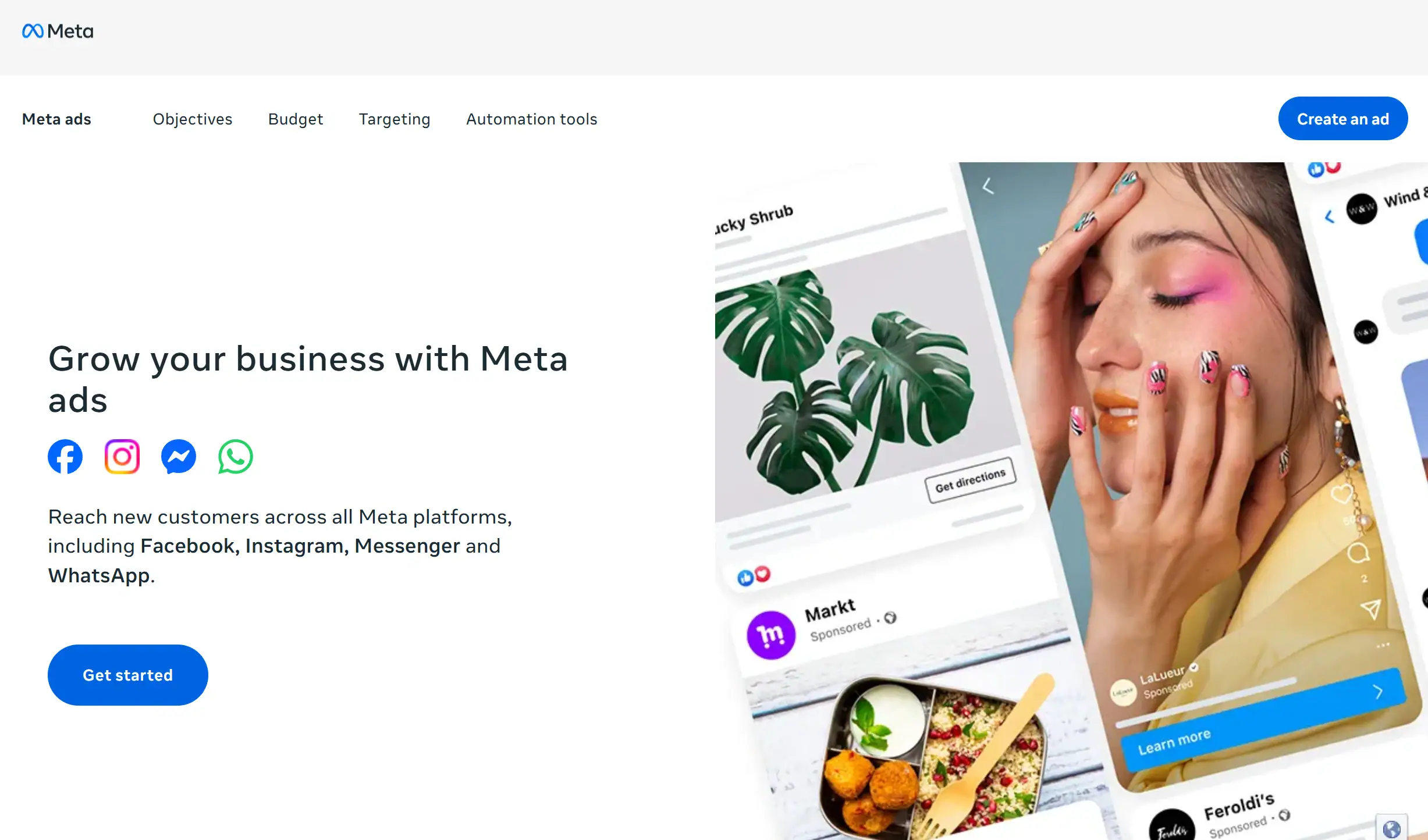
Meta Ads
Meta Ads delivers your message to customer audiences based on interests, behavior, and traits. It suits new brands that need to build awareness and spark consideration with engaging content.
The core difference: harvest demand or create demand?
Google harvests demand that already exists. Meta creates attention before buyers actively search.
When Google Ads has the edge for a new brand
Choose Google when customers already search for your product, service, or solution. The ad appears exactly when they're ready to buy, making orders and leads easier to measure. Shopify clearly distinguishes how Google captures search demand.
- Works well for local services, B2B, and familiar products.
- Needs a landing page with clear pricing, benefits, and a contact button.
Don't run Google if almost no one searches for your product category.
When Meta Ads creates an early advantage
Choose Meta when the product is new and its benefits show well in photos or video. Meta inserts the product while customers scroll Facebook or Instagram, then nurtures their interest.
- Needs short content, strong visuals, and multiple angles to test.
- A good fit for fashion, gifts, and new household products.
Meta doesn't replace Google. It creates demand that Google can harvest later.
Read more: 10 ideas to increase engagement for Facebook posts
Comparing what it takes to run them: content, data, and landing pages
The minimum data you need before launch
Install the Google tag or Meta Pixel and define one goal: purchase, form submission, or phone call. Google asks for a site-wide tag to measure conversions more accurately. Google's guide
| Channel | What you need |
|---|---|
| Google Ads | A clear landing page; form or order tracking |
| Meta Ads | Pixel, plus existing customer lists if any |

If you can't measure orders or leads, hold off on raising the budget.
How much does content decide the outcome?
Google needs ad copy that matches search intent. Meta needs images, video, and an angle that hits the customer's real problem. The landing page must repeat the ad's exact promise, load fast, and offer a single action button.
- Google: state the price, the benefits, the area you serve.
- Meta: test 3-5 different content variations.
Read more: 13 common Instagram mistakes your brand needs to avoid
Choosing Google Ads or Meta Ads based on your first 90-day goals
Choose based on whether you need to harvest demand or create demand.
| 90-day goal | Priority channel | How to do it |
|---|---|---|
| Orders or inquiries early | Google Ads | Run Search on keywords with buying intent |
| Launching a new brand | Meta Ads | Run video, product photos, explainer content |
| Both goals at once | Combine | Meta builds the audience, Google closes the demand |
Google Search reaches people already looking for your product or service, making it a fast way to generate leads per Google's guidance. Meta optimizes for the outcome you select, such as reach, video views, or messages per Meta.

Don't run Meta expecting instant orders if you don't yet have strong content and a clear landing page.
Read more: 4 Alternatives to Google Analytics
Google Ads or Meta Ads: Where should a new brand start?
Start with Google Ads if customers already search for your product, service, or need. Search ads reach people actively looking to buy, per Google's guidance.
Choose Meta Ads if the product is new, you need to create attention, and your content is good enough to explain the benefit quickly.
| Scenario | Channel to prioritize |
|---|---|
| Clear search demand exists | Google Ads |
| Need to create demand | Meta Ads |
Don't run both when the landing page, order tracking, and content aren't ready.
Read more: Blog
Choose the channel on data, not gut feeling. GUDJOB helps you build a Google Ads and Meta Ads plan that fits your budget, website, and sales goals.
FAQs
Q1: Is Google Ads or Meta Ads a better fit for a new brand
Meta Ads fits when you need awareness. Google Ads fits when customers already search to buy.
Q2: On a small budget, which channel should you run?
Pick one channel for the goal; don't spread the budget thin.
Q3: Can a weak website still run Google Ads?
Yes, but fix the sales page first to avoid burning money.
Conclusion
Choose Google Ads to harvest existing demand. Choose Meta Ads to create demand. Don't compare click prices—measure customer acquisition cost and profit instead.