What do e-commerce platforms need to keep in mind in the AI era that is changing the way users search and shop online?

When ChatGPT, Google and recently Apple all accelerated in the AI race to dominate the e-commerce market, many experts predict that 2025 will be a milestone that will reshape the way users search and shop online.

At the Apple – Google antitrust trial, Mr Eddy Cue, Apple CEO revealed that for the first time since Safari launched, Google searches on the browser have decreased.
A study by Bain & Co, published in February 2025, also reinforced this observation, when 80% of consumers currently relies on AI-generated results, for the least 40% of searches of them, resulting in a decrease in organic web traffic 25%. 42% Large language model (LLM) users received shopping recommendations directly from the AI platform.
Faced with this wave, technology giants quickly launched strategic moves. OpenAI Testing integrated payment features, helping users make purchases right on ChatGPT without leaving the application. Gemini and automatic price comparison, all rolled out first in the US market.
This shift is forcing the advertising industry and marketers to adjust their strategies SEO (Search Engine Optimization) luxurious AIO (AI Optimization).
Context on website content is the deciding factor
Instead of typing a few short keywords like before, users now tend to ask long, conversational questions and even add many additional questions.

Grandfather Max Sinclair, CEO of Azoma AI, a company specializing in consulting on AI search strategies for brands, said: "When used regularly, these AI models process long-form queries based on their 'model of the world,' the totality of accumulated knowledge and context. At the same time, the data Google has collected over the past 20 years, from age to location to interests, will also be integrated into AI search to gain a deeper understanding of user intent and search context."
This means that the traditional "keyword hacking" era is over.
The factors that large languages pay attention to are not only the product name, but also include the intended users, features, application scenarios and specific circumstances.
Experts say that, in addition to taking care of product description content on the website, brands need to broaden their perspective and proactively manage and optimize all brand-related information across the entire digital environment, including unverified comments and opinions about products and brands.

Product images must be consistent with the description content
One of the big changes in AI search is the shift to multi-modal search (Multimodal), where context goes beyond text but also includes product images.
Previously, if you searched for "blue handbag", the results could return red, brown or black bags because the model was not capable of recognizing visual signals.
In the AI era, this approach is counterproductive.
However, in multimodal AI search, it's not just about product images matching verbal descriptions.
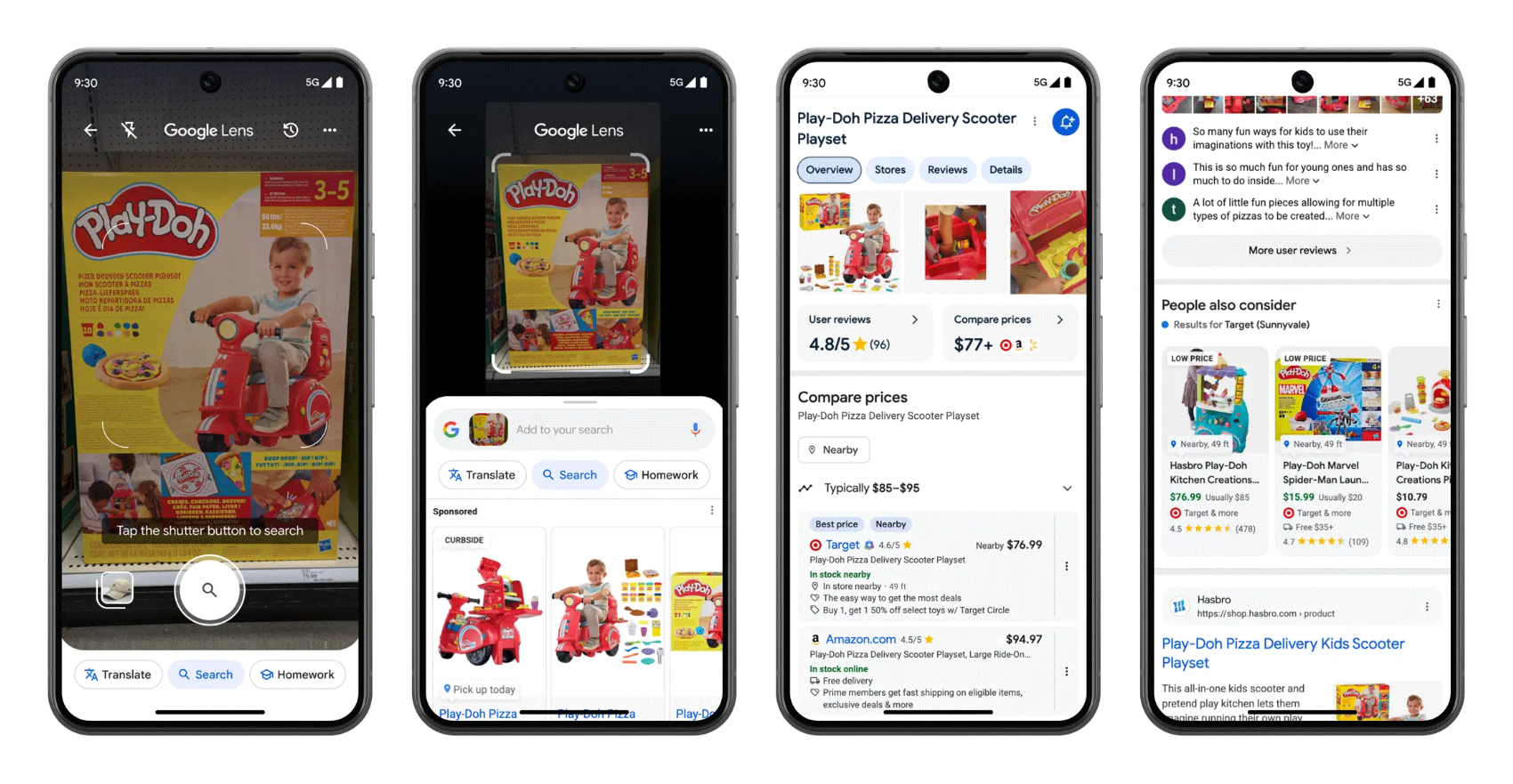
This trend is mainly driven by young consumers and generation Z – a group of people who have grown up in a visual environment, social networks and mobile devices, thereby influencing the way they want to shop. In addition, both the shooting angle and the level of detail displayed also significantly affect the ability to appear in image search results. According to vendors of digital asset management (DAMs) software, video is emerging as a key factor in increasing cross-modal search presence.
Optimize source code to improve AI readability
In the context of strong development of artificial intelligence, investing in "AI-friendly" content on the website will become meaningless, if the technical infrastructure behind it makes it difficult for large language models (LLMs) to read and collect data.
Experts recommend that the brand's technical team needs to ensure the ability to monitor and flexibly update the website to keep up with the latest advances in AI. LLMs.txt helps LLM better understand text content; robots.txt instructs search engines about accessible pages; structured data (like tag lists) are added to HTML to help AI search engines analyze more effectively.
By adapting to these changes, experts believe AI search will serve consumers better.
Nhu Quynh (According to Vogue Business)